Slacks vs Trousers: What's the Difference in the UK?
In British English, slacks and trousers are the same garment, but the words carry different weight. We compare cut, formality and when to use each.
The short answer: trousers win in Britain
Trousers is the default in British English, and default matters when you are choosing what to wear or what to buy. Slacks describes a narrower thing: a casual-smart trouser, cut generously, usually pressed, at home with a polo shirt and a pair of loafers. Same garment, different job for the word.
Two words, one garment
Strip away the labels and you are looking at the same item: a cloth tube for each leg, sitting at the waist. The difference is linguistic. Trousers is the British umbrella term, in use for centuries and related to the older word trews. Slacks came from North America in the nineteenth century, from the idea of a cut that is slack rather than close, and originally meant loose casual trousers rather than tailoring.
In Britain, trousers is the neutral word you would use in a shop, at a tailor or on a dress code. Slacks survives, but it carries a whiff of the 1950s golf club and the American mail-order catalogue. Nobody will misunderstand you, but the word does place you.
Slacks vs trousers at a glance
| Point of comparison | Slacks | Trousers |
|---|---|---|
| Where it is the standard word | North America; dated in Britain | Britain, Ireland, Australia and most English-speaking markets |
| Register | Casual-smart, slightly old-fashioned | Neutral; the default term |
| What it covers | Loose-cut casual trousers, often with a crease | Everything: jeans, chinos, suit trousers, joggers |
| Typical fabric | Wool blends, cotton twill, synthetic mixes that hold a press | Anything: wool, cotton, linen, denim, jersey |
| Usual cut | Straight or gently tapered, flat front, clean hem | Whatever the style demands, from skinny to wide-leg |
| Works with | Polo shirts, fine knits, loafers, golf shoes | Anything from a T-shirt to a dinner jacket |
| The risk | Reading as dated or costume in the UK | None, though it is generic, so add a style word |
| Where you meet it | US catalogues, period writing, golf ranges | Every British shop's navigation menu |
Formality: slacks sit in the middle, trousers go everywhere
Both words describe clothes you can wear to the office, but they do not promise the same thing. Trousers is a blank canvas: the formality comes from the words you put next to it, such as flannel, denim, linen, pleated or cigarette.
Slacks already contains its own instruction. It means casual-smart, looser than a suit trouser, pressed enough to look intentional, usually in wool or cotton twill. Think smarter than jeans, less formal than suit trousers, and entirely at home with a blazer.
- Trousers: clarity in Britain
- 5.0/5
Understood the same way in a Savile Row fitting room and a high-street changing room.
- Trousers: range of meaning
- 5.0/5
Holds denim, chinos, flannels and formalwear without needing a qualifier.
- Slacks: precision
- 3.5/5
Useful when you mean one particular cut: loose, flat-fronted, creased.
- Slacks: modern feel
- 2.0/5
In the UK it reads as dated or golf-club; few younger shoppers reach for it.
- Slacks: transatlantic reach
- 3.0/5
Well understood in the US, increasingly rare in British catalogues.
Cut and fabric: what each word quietly promises
A pair of slacks is usually flat-fronted, straight or gently tapered, with a crease down the leg and a plain hem. The cloth is typically a wool blend, a cotton twill or a mix chosen to hold a press without much ironing. The cut is forgiving through the seat and thigh. That is the look the word was coined for.
Trousers implies none of it. A pair of trousers might be wide-leg linen, pleated wool, selvedge denim, loopback jersey or a black-tie stripe. That is why trousers is the safer word when the person you are talking to cannot see the garment: it commits you to nothing beyond the shape of the legs.
The useful rule of thumb: a pair of slacks is always a pair of trousers, but a pair of trousers is not always slacks.
Who should choose slacks
Choose slacks when the word itself is doing some work:
- Writing for an American audience. In the US, pants is the everyday word and slacks means smart-casual trousers, so the term reads naturally in a catalogue or a lifestyle piece.
- Period flavour. A 1950s office, a mid-century menswear story, a country-club wardrobe: slacks sets the scene in a way trousers cannot.
- A very specific outfit. Flat front, straight leg, a crease, a wool blend, worn with a polo or a fine knit. If that is the picture in your head, slacks pins it down.
- Golf and relaxed clubwear. The word never really left that world and still turns up in golf ranges.
Who should choose trousers
Choose trousers for almost everything else:
- Anything written for a British reader. Shops, tailors, dress codes, invitations, office dress policies.
- Shopping. British retailers file the garment under trousers, chinos, or the cut and fabric. A search for slacks on a UK site tends to surface golf and workwear instead.
- Alterations. Hems, breaks and rises are discussed in the vocabulary of trousers.
- Range. If you might mean jeans, wide-leg linen, pleated wool or a dinner suit, trousers is the only word that holds all of them at once.
Shopping in Britain: what to search for
Walk the floor of a British department store and you will see chinos, wool trousers, cigarette trousers, wide-leg trousers, tailored trousers and joggers. You will not see a slacks sign. Online, the word pulls in golf trousers, workwear and imported American stock, which is fine if that is the look you want and frustrating if you simply wanted something smart for the office.
At the tailor's: the words that matter
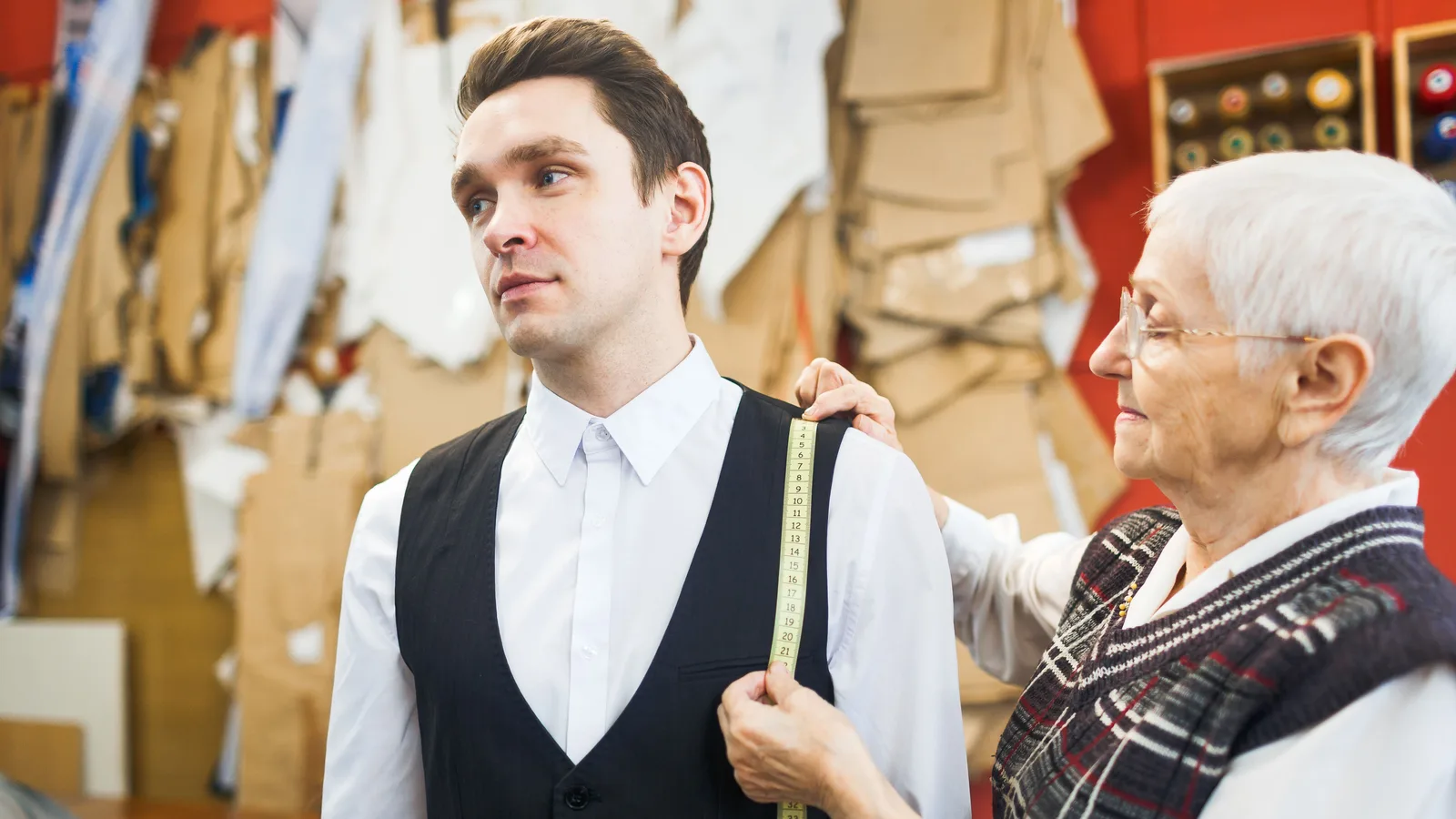
Take a garment to a tailor and the conversation moves to rise, seat, thigh, knee, hem and break. You will be asked how you want the leg to sit on the shoe and whether you want a turn-up. Nobody in a British fitting room will ask whether you mean slacks. If you are having something altered, say trousers, then describe the cut you want.
The final verdict
Trousers takes it, and not by a hair. In Britain it is the standard word, the one on the shop rail and the dress code, the one that stretches from denim to black tie. Slacks is a specialist term with real uses: it pins down a loose, pressed, casual-smart cut, and it carries a period or transatlantic flavour that trousers cannot supply.
So make trousers your default, and reach for slacks only when that particular look, or that particular reader, is exactly what you have in mind. The garment is the same either way; the word is the choice.
Frequently asked questions
Are slacks and trousers the same garment?
Physically, yes. They are the same item of clothing. The difference is dialect and tone: trousers is the British umbrella term, while slacks is an older, narrower word for a loose, casual-smart pair.
Do British people say slacks?
Rarely, and usually with a smile. You will hear it from older speakers, in golf settings and in writing about the mid-twentieth century far more than on a British shop floor, where trousers, chinos or the style name are used instead.
What is the American word for trousers?
Pants. In the US, trousers sounds formal and slacks means smart-casual trousers, so the three words sit at different levels of formality.
Can slacks be worn to a wedding?
At a relaxed daytime wedding, a pressed wool pair with a jacket can work. For anything with a formal dress code, the answer is a suit, and the garment you want is a pair of suit trousers.
What should I call them if I am not sure?
Trousers. It is understood in Britain, Ireland, Australia and most English-speaking markets, and it never sounds dated. Add the fabric or cut if you need to be precise.
Related articles
Boot Cut Jeans vs Flare: Which Cut Should You Wear?
Boot cut jeans or flares? We compare leg line, hem width, footwear and styling, name the overall winner and explain who each cut suits best.

Coat vs jacket: which one should you buy?
Coats and jackets compared on warmth, length, formality and versatility, with a clear overall winner and guidance on which one suits your wardrobe.
Gold vs Silver Jewellery: Which Should You Choose?
Gold or silver jewellery? We compare tone, durability, price, tarnish and skin sensitivity, then name the metal that suits most people best.