How to tell if a Rolex is real: what to check, in order
A practical, step-by-step guide to spotting a fake Rolex: dial printing, the date lens, rehaut engraving, serial numbers and when to call a watchmaker.
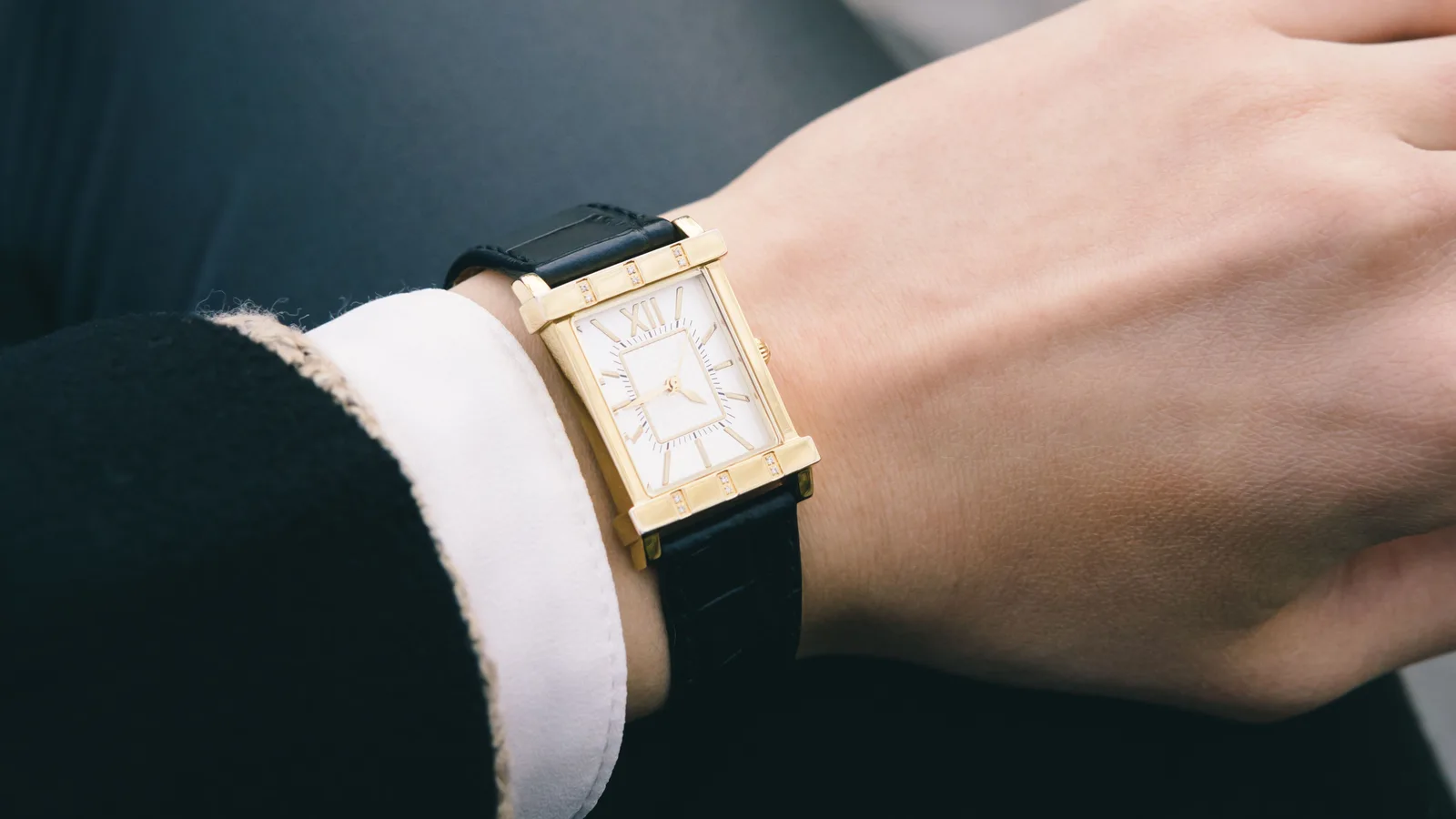
The short answer
There is no single tell. A genuine Rolex is judged on a group of details that all have to agree with each other: the printing on the dial, the date magnifier, the engraving around the inner bezel, the serial and reference numbers, how the case and bracelet are finished, and finally the movement inside. A fake usually fails on two or three of those at once rather than on one show-stopping flaw.
If you can only do one thing, have the watch examined by a watchmaker who services Rolex, or take it to an authorised Rolex service centre. Everything you can check yourself is a filter: it tells you whether the watch is worth paying for a proper inspection, not whether it is genuine.
What you need before you start
- Daylight or a bright desk lamp, plus a small torch so you can rake light across flat surfaces at an angle.
- A 10x jeweller's loupe. Most of the details that matter are too small for the naked eye.
- Reference photographs of the same reference number, so you can compare dial layout, case shape, bezel and bracelet style. You are checking that the watch matches its own model, not just that it looks Rolex-like.
- Any paperwork there is: warranty card, service receipts, original purchase details, spare links.
- The reference number and serial number, written down. You will want them later.
- A watchmaker lined up in advance, ideally before you commit to buying anything.
Check the watch in this order
-
Identify the reference and note the numbers
Work out which model it is meant to be. On most modern Rolex the reference is engraved between the lugs at 12 o'clock, visible with the bracelet off; the serial sits either between the lugs at 6 o'clock or on the rehaut (the inner bezel) at 6 o'clock. Write both down, then compare the watch against published information for that exact reference: case size, dial layout, bezel type, bracelet style.
-
Stand back and look at the whole watch
Before the loupe, check the silhouette. Are the lugs even and symmetrical? Does the bracelet sit flush between them, with no gaps at the end links? Are the case flanks still crisp, or soft and over-rounded? Soft edges can mean a fake — or a genuine watch that has been badly polished, which matters for value even when the watch is real.
-
Read the dial printing under a loupe
The coronet and the text should be sharp, cleanly raised and evenly spaced, with no ink bleeding into the dial and no letters sitting at different heights. Look along the dial from the side: applied hour markers should stand at a consistent height and sit straight, with lume filling the frame evenly. Check that the minute track is continuous and evenly spaced all the way round.
-
Examine the hands and the seconds hand
Hands should have crisp edges and clean finishing, with no rough paint or burrs where they stack at the centre. Watch the seconds hand for a minute or two. It should move in small, smooth increments — but that alone proves nothing, because many fakes use high-beat movements that sweep just as smoothly. A visible once-a-second tick does mean a quartz movement, and Rolex does not make quartz watches.
-
Test the date and the magnifier
On a date model, the cyclops should enlarge the date so it almost fills the window, roughly 2.5x on modern references, with the numerals crisp and centred rather than crowding one edge. On modern sapphire crystals the lens is coated underneath, so the date stays readable when you tilt the watch rather than washing out into a glare.
-
Study the rehaut engraving
On most modern references the inner bezel carries the repeated ROLEX engraving. It should be deep, even and aligned with the minute track. Fakes often have shallow, uneven or slightly misaligned engraving that looks stamped on rather than cut, and it can fade or blur towards the edges of the flange.
-
Turn it over and work the bracelet and crown
Most Rolex casebacks are plain; engraving on the back is limited to certain dive models such as the Sea-Dweller and Deepsea, so a decorated caseback on a Datejust is a warning. Check the clasp opens and closes with a firm, clean click, that the coronet on the clasp is crisp, and that the inside of the clasp is properly finished. Then screw the crown down: the threads should feel smooth and the crown should seat fully against the case.
-
Have it opened and verified properly
A watchmaker who services Rolex can remove the caseback, check that the movement is the right calibre for the reference, assess whether the case, dial and movement belong together, and pressure-test the watch afterwards. Ask for the findings in writing. This is the only step that gives you an answer you can rely on.
The dial is where most fakes give themselves away
Printing quality is the single most useful thing to look at with a loupe. On a genuine dial the text is applied cleanly, edges are sharp under magnification, and everything is aligned to the same baseline. On a fake you tend to see slightly fuzzy edges, uneven spacing between words, ink that has crept beyond the letter shapes, or a dial that looks flat and slightly metallic under raking light rather than having a true sunburst or even matte finish.
Look at the bottom of the dial too. The Swiss Made marking should sit symmetrically, and on newer references where the coronet sits between Swiss and Made, the spacing and alignment are precise. Markers are worth the same attention: applied indices that lean, sit at different heights or have lume sitting proud of the frame are a bad sign.
The case, the numbers and the crystal
Serial and reference placement tells you a lot, because it has to match the age of the watch. Older Rolex have the numbers engraved between the lugs, under the bracelet. From the mid-2000s many references moved the serial to the rehaut at 6 o'clock. Look at the style of the engraving as well as the digits: a laser-etched number on a watch whose era should have a stamped one is a mismatch, and so is a serial that looks freshly cut into an old case.
On most modern sapphire crystals there is a tiny coronet etched in the crystal at 6 o'clock, visible only with a loupe held at an angle in the right light. Good fakes now copy it, so treat it as one consistency check among many rather than proof either way. Case finishing deserves a look as well: genuine case flanks and lug bevels are defined, while fakes often look slightly rounded or over-polished, and the transition between brushed and polished surfaces can be blurred.
Bracelet, clasp and the weight question
On most modern bracelets the links are held by screws rather than pins, the end links meet the case with no visible gaps, and the bracelet should feel solid rather than rattly. The clasp is a good place to look closely: the folding action should be firm, the coronet crisp, and the inside of the clasp properly finished with no sharp edges left from casting.
Weight is the test people reach for first, and it is the least reliable. A steel Rolex has a certain heft and a gold one more so, but fakes are now built with tungsten inserts to match the weight of the real thing. Never decide on weight alone, and never decide on the smoothness of the seconds hand alone — both are easily copied.
Box, papers and the seller's story
Boxes, warranty cards, booklets and stickers are faked in quantity and sold separately from watches, so paperwork supports a watch rather than authenticating it. What you are checking is consistency: does the card's reference and serial match the watch, do the dates and model make sense together, and does the seller's account of where it came from hold up when you ask a few plain questions?
Be cautious with the familiar patterns — no paperwork because it was a gift, a warranty card whose serial doesn't match the case, a service history that exists only in conversation, or a seller who won't meet at a watchmaker's premises. None of those is proof of anything on its own, but each one should change how much you rely on the seller's word.
What each kind of check can actually tell you
| Check | What it can show | Where it stops |
|---|---|---|
| Photos from a seller | Obvious problems: wrong fonts, poor finishing, a dial that doesn't belong to that case | A good fake photographs well, and lighting hides the detail that matters |
| Your own loupe inspection | Dial, hands, date lens, engraving and bracelet quality | Can't confirm the movement, or that the parts started life together |
| Caseback-off check by a watchmaker | Whether the movement is the correct calibre for the reference | A watch assembled from genuine parts on a non-original case can still look right |
| Authorised Rolex service centre | The strongest answer available, usually delivered as part of a service assessment | Takes time, and the watch may have to be sent away |
Where people go wrong
- Relying on weight. Tungsten-loaded fakes now match the heft of a genuine watch closely.
- The smooth seconds-hand myth. Plenty of fakes beat at the same frequency as a real movement. A smooth sweep rules out quartz, nothing more.
- The magnet test. Running a magnet over a watch proves nothing at all, and can magnetise a genuine one so that it starts running fast.
- Assuming any jeweller will authenticate it. Many will happily sell a watch but won't certify one. Ask specifically for a watchmaker's inspection and what it covers.
- Confusing not original with not genuine. A real Rolex with a replacement dial, aftermarket bezel or heavily refinished case is still genuine, but it is no longer original and is worth less. Sellers blur that distinction.
- Checking one thing and stopping. The whole point of the checks is that they agree with each other. One clean detail means very little.
Staying safe when you're buying
Do not open the caseback yourself. Amateur attempts scratch the case, damage the seal and mean the watch needs a pressure test afterwards, all of which costs you money and trust with the seller. If a seller won't let a watchmaker open it, that refusal is your answer.
Never send a deposit to a private seller before inspection, and don't hand over money in a car park. Meet at a watchmaker's premises or somewhere with CCTV and staff, bring someone with you, and keep photographs, messages and receipts. Pay in a way that leaves a record and offers some protection.
If the watch is inherited rather than bought, get it checked before you spend anything on restoration — and don't polish it, clean it with abrasives or have links removed first. Original condition carries value, and over-polishing can't be undone.
Frequently asked questions
Can a fake Rolex contain genuine parts?
Yes. Watches are routinely assembled from a genuine movement, dial or bracelet fitted to a non-original case. They can pass a quick visual check, which is why the caseback-off inspection by a watchmaker who knows the reference matters.
Where exactly is the serial number on a Rolex?
On older watches it is engraved between the lugs at 6 o'clock, under the bracelet. From the mid-2000s many references moved the serial to the rehaut, the inner bezel, at 6 o'clock. The style of engraving should match the age of the watch.
Is the coronet etched in the crystal a reliable sign?
It is present on most modern sapphire crystals at 6 o'clock, but it is tiny and good fakes copy it. Its absence on a modern watch is worth questioning; its presence is a consistency check, not proof.
What magnification should the date window have?
Around 2.5x on modern references, so the numerals nearly fill the window and stay readable when you tilt the watch. A date that sits small in the window or off to one side is a warning sign.
Will an authorised dealer tell me if a watch is genuine?
Not always as a standalone service. Many dealers will assess a watch as part of servicing, so ask what the check involves before you hand it over, and be clear that you want the findings confirmed rather than a verbal opinion.
Related articles
How to Clean Silver: The Best Methods, Step by Step
Tarnish is sulphur, not dirt. The gentlest way to clean silver jewellery, cutlery and silver plate, plus when a foil bath or dip is the right call.

How to Remove Scratches from Sunglasses Without Ruining Them
Most lens scratches cannot be polished out at home — but some can. Work out which kind you have, then clean, polish and protect them safely.

How to Style Boyfriend Jeans: A Practical Guide
A practical guide to styling boyfriend jeans: balance the volume, fix the hem, choose shoes and layers, and solve the most common fit and styling problems.